

Industry experts at the BNP Paribas Quant Forum 2026 explored the rise of AI, shifting macro dynamics, and the role of QIS in navigating market uncertainty.
Key Takeaways
• Experts at the BNP Paribas Quant Forum 2026 said firms must structurally evolve with AI.
• AI concentration risk is piling pressure on institutional portfolios, investors told the BNP Paribas Quant Forum 2026.
• Geopolitical headwinds, energy shocks, inflation, and rising bond yields are unsettling investors.
• As markets become more unpredictable, Quantitative Investment Strategies (QIS) are proving to be a stabilizing force for investors.
AI: An Operational Enabler, but a Portfolio risk?
AI was a recurrent theme at the BNP Paribas Quant Forum 2026. As AI continues to evolve, financial institutions have little choice but to adapt.
Successfully implementing AI in an institution
Companies must consider how advances in Natural Language Processing and the way information is accessed will impact their business models. For example, Charles Holive, Chief AI Officer, BNP Paribas CIB, expects people to start moving away from navigating traditional graphic user interfaces on physical screens towards simply conversing with AI agents. Another expert added companies should start designing technology products for use by both AI agents and humans.
From accelerating research, analysis and back-testing, and the generation of predictive signals, through to streamlining risk and client reporting, AI has been a game changer across QIS and finance. For AI to be effective, however, it needs access to robust, well-structured internal data, all of which must be underpinned by clear audit trails and explainable outputs, according to several speakers. “Trust in agentic AI solutions is what truly matters, and for that to be realized, there must be trust in the context,” commented Holive.
In an AI-enabled future, the workforce of tomorrow will look very different. One panelist noted humans will most likely be entrusted with orchestrating teams of intelligent agents, defining tasks and overseeing their execution. Another technology leader added experts, or so-called ‘AI Janitors’, will still be needed to validate AI’s output.
But the importance of humans should not be underestimated. As one portfolio manager put it, “humans plus AI is better than just AI.” This was echoed by another speaker, who acknowledged that while AI can help their team process broker reports much faster, it is not a substitute for a portfolio manager’s discretionary judgement.
Assessing AI concentration risk in Portfolio Management
AI may be the dominant investment theme, but growing AI concentration risk is fast becoming a challenge for institutional portfolios across multiple asset classes.
A panelist described the scale of the problem at the BNP Paribas Quant Forum 2026, estimating that circa 70% of their portfolio assets are linked to AI, either directly or indirectly. Even broad asset class diversification offers limited protection, according to one investor, as equity and bond markets are heavily exposed to AI, private market and venture capital dealmaking is increasingly skewed towards AI, and real estate is heavily exposed to data centers. Compounding matters further, panelists said conventional financial metrics such as beta or correlation almost certainly understate asset managers’ concentration to themes like AI.
Nathalie Texier-Guillot, Co-Head, Global Equities Sales, Americas, BNP Paribas, also raised the question of whether the growing use of Agentic AI, particularly in the investment research process, is leading to increased crowding or herding behavior amongst traders.
Speakers at the BNP Paribas Quant Forum 2026 are divided on the issue.
Although one asset manager drew striking parallels between today’s AI driven crowding and the algorithmic crowding that preceded the 2007 Quant Quake, others are less pessimistic. Even if multiple agents are trained using the same data, a COO said they may still produce different outcomes, because their data processing, model training and investment horizons and objectives will not be identical.
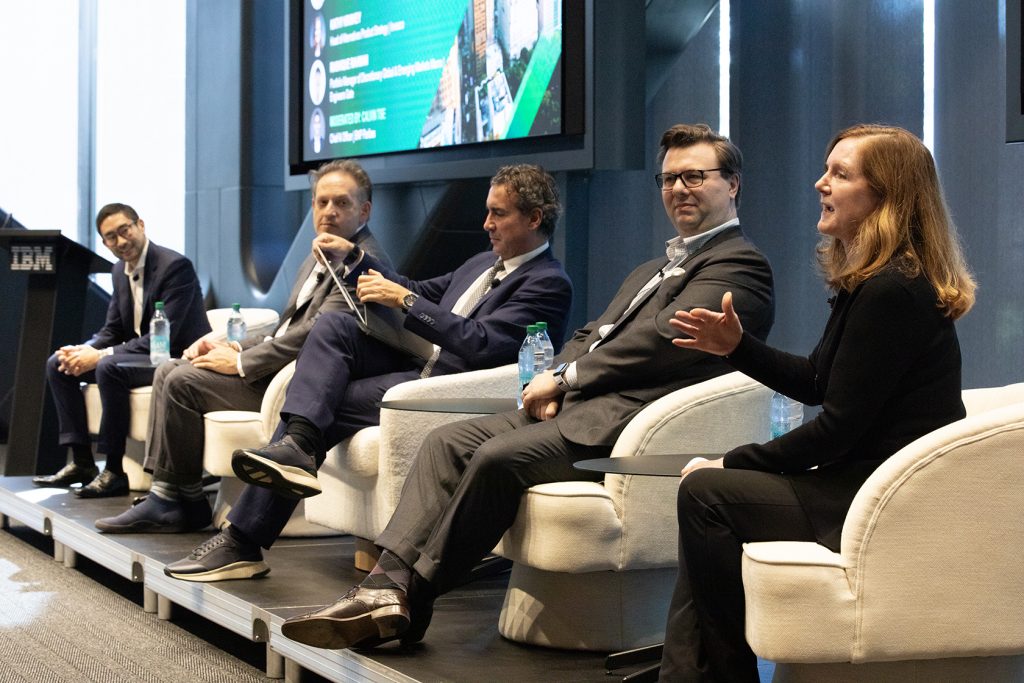
The effects of shifting macro dynamics
Investors at the BNP Paribas Quant Forum 2026 went on to discuss macro trends.
One fund manager said that tensions in the Middle East, which are causing energy costs to spike, are proving particularly painful for energy-importing Emerging Asian markets, although much less so for energy exporting LATAM economies. Emerging markets also face rising food prices as El Niño takes its toll and the Russia-Ukraine war continues to disrupt grain supplies.
With no end in sight to inflation and rising bond yields, assets that are uncorrelated to the Dollar have seen an unexpected rise in demand. Speakers also flagged subdued FX markets, commodity gyrations, and interest rate volatility, as being trends to watch out for.
Going into 2027, the biggest tail risks, according to investors, are a further escalation of tensions in the Middle East and the potential for conflict in Asia-Pacific.
BNP Paribas Quant Forum 2026: Finding alpha in unknown markets with QIS
Asset managers outlined how they are using QIS to generate alpha and achieve diversification.
Beyond being a performance and diversification engine, asset managers at the BNP Paribas Quant Forum 2026 said they also deploy QIS for research and ideation purposes, or in strategies which are difficult to implement internally, such as vol carries, or to gain exposure to markets that cannot be accessed directly or are too complex.
BNP Paribas QIS put a spotlight on Cross Asset Trend and Equity Dispersion strategies, supported by the academic research of the QIS Lab, highlighting BNP Paribas’s systematic capabilities in finding alpha amidst market unpredictability.
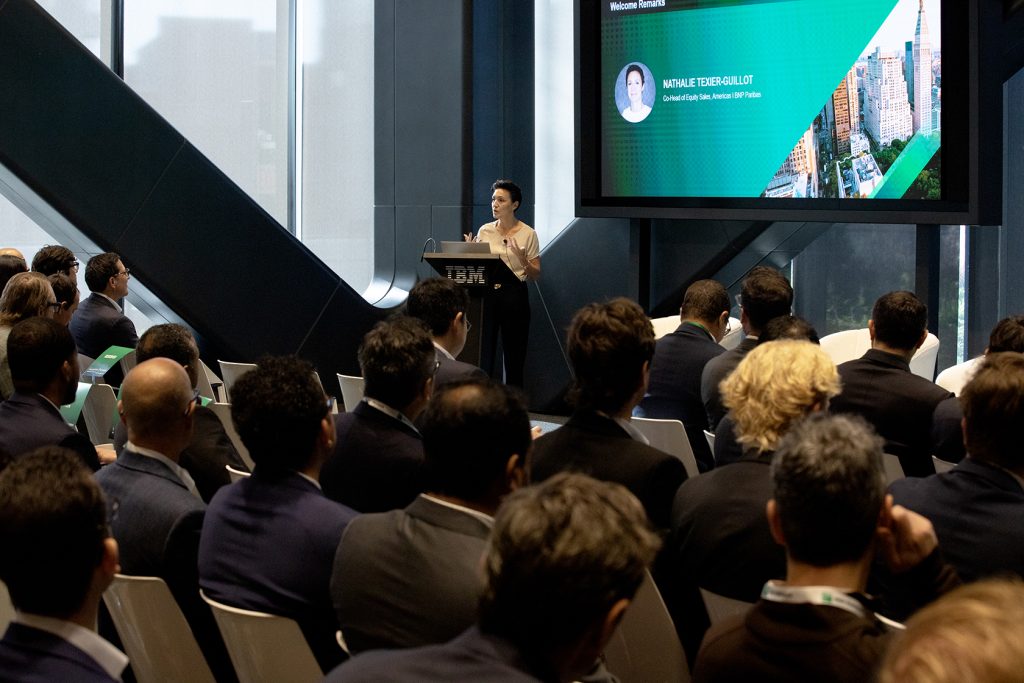
The BNP Paribas Quant Forum 2026 was attended by over 150 industry leaders across US and Canadian Public and Corporate Pensions, Hedge Funds, Insurance companies and Asset Managers.





| FAQ |
| What is the BNP Paribas Quant Forum? The BNP Paribas Quant Forum is an annual event bringing together over 150 industry leaders- including asset managers, hedge funds, and pension funds – to discuss the latest advancements in quantitative investment strategies, technological shifts like AI, and evolving global macro dynamics. |
| What is AI concentration risk in portfolio management? AI concentration risk refers to the heightened exposure of a portfolio to a single theme or sector – in this case, Artificial Intelligence. As AI becomes a dominant driver of market movement, assets like equities, private equity, and even real estate (via data centers) become highly correlated, potentially making it harder for investors to achieve true diversification. |