
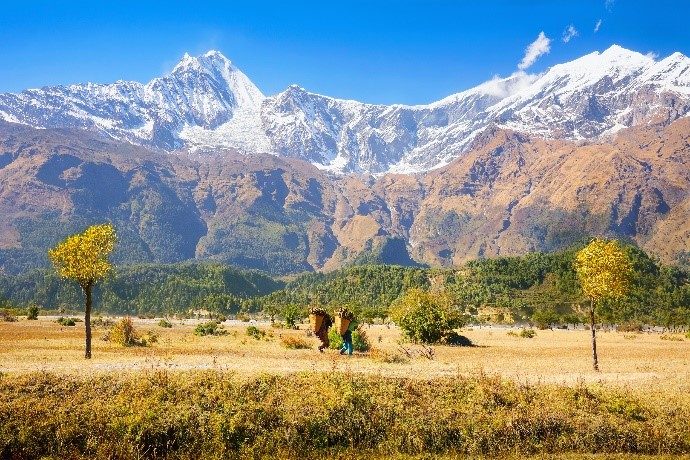
Key takeaways – Green Bond for Glacier Melt Awareness
• In March 2026, ADB (Asian Development Bank) issued a USD 100 million, 5-year green bond for glacier melt awareness, arranged by BNP Paribas as lead manager and listed on the Luxembourg Green Exchange.
• Proceeds will be allocated through ADB’s Green and Blue Bond Framework to projects supporting climate-resilient infrastructure and livelihoods, integrated water resource management, early warning systems, and disaster risk reduction, amongst others.
• Investors gain ESG impact by financing projects that meet Green Bond Standard criteria and safeguard the livelihoods of billions.
• This issuance complements ADB’s broader glacier related portfolio, including Building Resilience in the Hindu Kush Himalaya, Glaciers to Farms and the Resilient River Basins Initiative.
Why the green bond for glacier melt awareness matters
Glaciers are large, persistent bodies of dense ice that form where the accumulation of snow exceeds its melt over many years, often centuries. They are integral components of the Earth’s cryosphere and serve as natural freshwater reservoirs, climate regulators, and sentinels of climate change. Glaciers are critical not only to mountain ecosystems but also to the billions of people who depend on glacier-fed rivers for water, agriculture, energy, and disaster resilience.
Glaciers play a pivotal role in building climate resilience. The preservation and monitoring of glaciers, as well as the management of their downstream impacts, are essential to safeguarding water security, reducing disaster risk, and sustaining fragile ecosystems. This includes glacial lake outburst flood (GLOF) early warning systems, upstream catchment protection, permafrost monitoring, and investments in resilient infrastructure in glacier-dependent regions.
Glaciers also act as climate regulators:
- Approximately 1.9 billion people globally depend directly on glacier- and snow-fed river basins for their drinking water, agriculture, energy production, and ecosystems.
- They store about 70% of the world’s freshwater and gradually release it, regulating water flow throughout the year, especially during dry seasons.
- Glaciers reflect solar radiation, helping to maintain the planet’s energy balance and mitigate regional temperature rise.
- The melting of glaciers contributes to sea-level rise, with the Hindu Kush Himalaya region alone projected to lose up to 75% of its ice by 2100 under current emissions trends.
- Their retreat threatens the carbon balance by altering hydrological cycles and increasing the risk of forest loss, soil erosion, and methane release from thawing permafrost.
The conservation and sustainable management of glaciers and glacier-fed systems are among the most urgent climate actions required today. Like forests and oceans, glaciers are essential components of Earth’s natural systems, and their protection offers a cost-effective, scalable, and irreplaceable solution to support climate adaptation and resilience.
The green bond for glacier melt awareness – structure, size and market placement
In March 2026, the Asian Development Bank (ADB) issued a green bond for glacier melt awareness, engaging with investors on ADB’s projects and programmes that will help communities in Asia become more resilient against the impacts of melting glaciers.
The USD 100 million 5-year issue was arranged by BNP Paribas as a lead manager, proceeds of which will be used in accordance with ADB’s Green and Blue Bond Framework. The notes are listed on the Luxembourg Green Exchange (LGX).
BNP Paribas has been the leading bank for green bond financing for government and corporate issuers worldwide since 2022, structuring more than USD 9 billion of deals in 2026 so far, according to Bloomberg. Its role as a lead manager for this issuance underscores the bank’s capacity to mobilise green bond financing for multilateral development initiatives.
BNP Paribas is proud to support this green bond, directing USD 100 million of high-quality capital to various investments by ADB which continues to prioritise resilience, protecting glacier fed basins and safeguarding livelihoods across Asia.
Constance Chalchat, Chief Sustainability Officer, CIB & Global Markets, BNP Paribas
How proceeds are used – a broad climate resilience mandate
The net proceeds of the issue of the Notes will be included in the ordinary capital resources of ADB which will then be allocated to a special sub-portfolio therein and tracked against the disbursements to eligible green projects.
As long as the Notes are outstanding, the balance of the sub-portfolio will be reduced, at the end of each quarter, by amounts matching the disbursements made during the quarter with respect to the eligible green projects. Pending such disbursement, the sub-portfolio will be invested in accordance with ADB’s liquidity policy.
Projects eligible for financing under ADB’s Green and Blue Bond programme include but are not limited to those supporting climate-resilient infrastructure and livelihoods, integrated water resource management, early warning systems, and disaster risk reduction.
The financing complements ADB’s portfolio of initiatives that integrate glacier monitoring, risk assessment, resilient infrastructure, and water governance into national strategies. These include Building Adaptation and Resilience in the Hindu Kush Himalayas, Glaciers to Farms, Resilient River Basins, and Central Asia Regional Economic Cooperation (CAREC) Water Pillar.
Investor benefits – ESG impact
The green bond for glacier melt awareness offers an innovative financial solution for investors to support ADB’s pioneering work to build resilience from glacier melt effects.
Eligible projects under this Green Bond will follow the green bond eligibility criteria and will contribute to the protection, monitoring, and climate-resilient management of glaciers and their surrounding ecosystems. They align with broader climate adaptation and nature protection goals and are vital to sustaining the wellbeing of current and future generations in glacier-dependent regions.
ADB’s broader glacier-related portfolio
The Asian Development Bank (ADB) is strongly committed to addressing the accelerating impacts of glacial melt by scaling up investment in glacier-related resilience and adaptation.
Recognising the critical role glaciers play in sustaining water security, ecosystems, and livelihoods across Asia, ADB is leading innovative regional initiatives such as Building Resilience in the Hindu Kush Himalaya, Glaciers to Farms, Resilient River Basins Initiative and Central Asia Regional Economic Cooperation (CAREC) Water Pillar. These programmes integrate science-based glacier monitoring, risk-informed planning, and climate-resilient infrastructure development.
ADB is also supporting countries to mainstream glacier-related risks into national climate strategies, enhance early warning systems for glacial lake outburst floods (GLOFs), and mobilise concessional and private financing for nature-based and engineering solutions.
Through green bonds and thematic financing tools, ADB is pioneering efforts to position glacier preservation as a core pillar of climate resilience and regional cooperation.
Explore in‑depth analysis of the financing gaps, policy recommendations, and practical pathways to mobilise public and private capital for glacier related mitigation and adaptation.
Download the White Paper: “Barriers to Glaciers‑Related Financing”, led by the International Cryosphere Climate Initiative (ICCI).