

Key takeaways – Policy and Markets 2025
• Macro-economic outlook: Inflation remains the dominant risk. At the Policy and Markets 2025 conference experts warned that price stability outweighs a slowing labor market, suggesting the Federal Reserve should stay firm on its 2% target despite recent headline declines.
• AI productivity gains, immigration and Fed policy intersect: The conference highlighted how rapid AI productivity gains and new immigration reforms reshape labor dynamics, prompting the Fed to balance inflation pressures with emerging structural shifts in the workforce.
• Future Fed leadership and policy outlook: Policy and Markets 2025 panelists projected a flexible, data‑driven stance for the December Fed meeting and a 2026 chair transition that could create elevated uncertainty, emphasizing the need for clear, credible communication to markets.
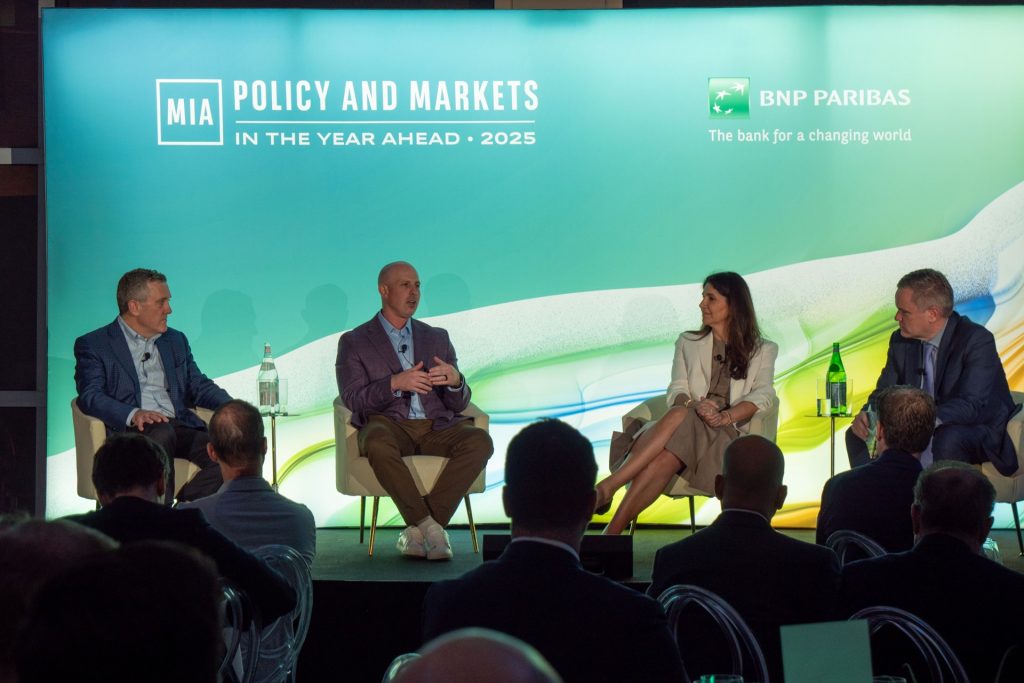
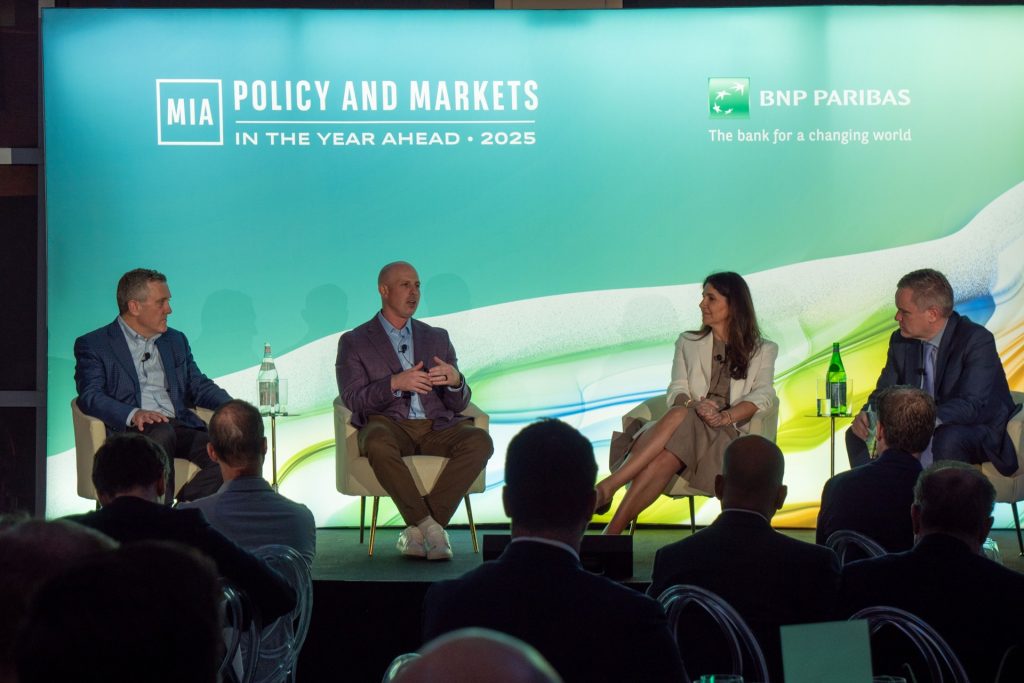
The fifth edition of the Policy and Markets 2025 conference, hosted by BNP Paribas U.S. at the Bass Museum in Miami, brought together a dynamic mix of former central‑bank officials, hedge‑fund strategists, academic economists and senior political consultants.
Set against a backdrop of volatile macro‑economic conditions and rapid policy shifts, discussions focused on the forces most likely to shape policy and markets over the next twelve to eighteen months.
Policy and markets 2025: what are the main policy drivers shaping markets in 2025?
Macro‑economic outlook: Inflation still holds the reins
Despite a decline in headline inflation since 2022, price pressures remain above the Federal Reserve’s 2% target. Meanwhile, in the labor market, recent data have indicated job gains have slowed, even as inflation remains stubbornly above target.
When the panel turned to the question of whether persistent inflation or a slowing labor market posed the greater risk, the consensus tilted decisively toward price stability.
One panelist warned that any premature dovish shift would jeopardize the Fed’s credibility in meeting its 2% target. “This summer was interesting, it was the first piece of data that showed the labor market is weaker, and the Fed panicked.”
How immigration policy has impacted the labor market
When looking at the labor market, the recent immigration policy reforms have made it difficult to compare the real figures to previous years. One panelist highlighted the reforms have made the unemployment rate look better than it really is, hiding a modest amount of slack in the labor market.
Inflation vs labor demand: a balancing act
This dynamic poses a challenge for the Fed’s dual‑mandate of price stability and full employment. As the Fed tries to balance the two, speakers noted there is growing dissent among its members with some officials wanting to prioritize labor‑market conditions, while other members remain focused on taming inflation. This is giving rise to a new norm of policy disagreement and short‑term market volatility.
“I think dissent will become the norm going forward,” explains one panelist. “We’re already seeing multiple camps within the Fed. Even at the September meeting, the spread between the highest and lowest three‑meeting rate forecasts was one of the widest on record.”
For investors, the bottom line is simple: markets will stay focused on inflation, with labor‑market worries also playing an important role.
What’s next for the federal reserve?
Who will be the next Fed Chair in 2026?
The new Fed Chair is expected to be appointed in early 2026. While panelists discussed several officials as strong candidates, they thought that the final choice must preserve the Fed’s credibility and independence.
In reflecting on the Fed’s trajectory, the panel highlighted that Jerome Powell’s tenure has been marked by a dual‑mandate tension: inflation has been above target for four years, while the unemployment rate remains near the natural rate.
The next Fed Chair will likely inherit a more decentralized decision‑making process, but will still need to project credibility through clear, data‑anchored policy signals.
“We could be in for a change if the new incoming chair is more focused on getting a pulse into the real economy, turning us into data watchers,” commented one panelist.
Investors should therefore prepare for a Federal Reserve that is more unpredictable and may need to address unforeseen shocks, noted speakers, particularly those emanating from rapid technological change.
AI: productivity, policy and potential pitfalls
AI productivity gains vs labor demand
Artificial‑intelligence (AI) tools are spreading faster than any prior technology. Where the telephone and the internet needed years (the internet even decades) to reach 100 million users, ChatGPT did so in a matter of months. This rapid diffusion means productivity gains could materialise far sooner than traditionally expected.
However, speakers suggested the rapid expansion of AI also raises concerns that it could displace human workers. Panelists noted however that the labor impact is not a wave of layoffs but a subtle reallocation. For example, routine analytical work once done by junior analysts is now automated. All this has created a “low‑hire, low‑fire” environment.
One panelist commented, “I hear a lot about whether AI has led to an increase in firing. I would say it has led to a resistance to hiring, not especially to firing.”
This interplay between AI productivity and labor demands shines a potential light on today’s economic backdrop: AI productivity gains keep GDP growth surprisingly resilient despite weaker job gains.
What are the limitations of AI uptake?
Panelists discussed one notable drawback to AI uptake: scaling AI is capital‑intensive. Large‑language‑model inference demands massive compute and swift data‑centre expansion, raising exposure to infrastructure costs, electricity prices, water use and local opposition.
Diffusion of AI technology also poses a challenge. Although tools such as ChatGPT have been adopted rapidly by the general public, businesses need considerably more time to understand and integrate AI into their operations and create productivity gains. “Businesses are not ready right now, and it will be a slow diffusion,” commented one panelist. “Electricity took 50 years, automobile 60 years. Not everything changes quickly.”
How will policy shape the AI market?
Policy will also play an important role in managing the impact of AI on the economy.
Higher AI-driven productivity could put pressure on inflation. Therefore, according to speakers, policymakers must recognize that a higher neutral real rate may be required to keep inflation anchored if productivity jumps.
One panel debated whether the central bank should factor the forward‑looking AI productivity boost into its policy rate decisions. If AI raises the neutral rate, they said, premature cuts could ignite inflation expectations, whereas waiting too long could stall growth.
In short, attendees heard that AI is poised to become the next major engine of productivity, filtered through a low‑growth labor market, heightened capital needs and evolving policy frameworks. Companies that combine aggressive talent development with sustainable infrastructure – and stay alert to policy shifts – will be best positioned to capture the upside while managing the attendant risks.
Policy and markets 2025 in summary
Policy and Markets 2025 offered a rare glimpse into the confluence of monetary policy, fiscal strategy and technological disruption. By surfacing divergent viewpoints, the conference presented a holistic view of the challenges and opportunities that will define the global financial landscape over the next few years.



Read the latest Global Outlook and check the Markets 360 page for BNP Paribas’ latest strategy and economics.
About the Policy and Markets 2025 conference
What is the Policy and Markets conference?
- The Policy and Markets Conference, now in its fifth year in Miami, is one of BNP Paribas’ flagship conferences in the U.S., bringing together the bank’s clients and external speakers to discuss the latest policy decisions and their impact of global financial markets.
What is the purpose of the Policy and Markets conference?
- Policy and Markets is a cornerstone of a series of strategic gatherings BNP Paribas hosts in the U.S, providing clients with global expertise locally. It illustrates BNP Paribas’ commitment to supporting client’s decision-making with strategic thought-leadership content.
Why was the Policy and Markets 2025 conference held in Miami?
- Since opening its Miami office, BNP Paribas has expanded its footprint and is committed to its clients in this area and the wider U.S market.
- BNP Paribas is continuing to expand the Policy and Markets conference and held its inaugural Policy and Markets 2025 Boston conference. BNP Paribas is set to continue expanding this conference across the U.S.
How is BNP Paribas supporting Miami’s finance and business?
- BNP Paribas is an active member of the Miami‑Dade Beacon Council – the city’s official economic‑development partner – working closely with the mayor’s office on initiatives that drive growth and innovation. Earlier this year, Matt O’Connor, Miami Office Manager at BNP Paribas, was honored with a key to the city – a recognition of BNP Paribas’ commitment to Miami.
How is BNP Paribas supporting Miami’s local community?
- During the Policy and Markets 2025 conference, BNP Paribas announced the launch of the Bass NextGen program membership by BNP Paribas. This program gives Miami‑Dade kids free admission for themselves and a caretaker valid until their 18th birthday.
- BNP Paribas also invests in emerging artistic talent, commissioning works from local creators such as Najja Moon and Bex McCharen.