

Now celebrating its 10th anniversary, BNP Paribas’ flagship Global Markets Conference returned to London on November 11, where experts talked about shifting geopolitics, the increasingly ubiquitous role of AI, and continuing economic realignment.
What were the top takeaways from the BNP Paribas Global Markets Conference 2026?
• Europe must renew its pursuit of strategic autonomy amidst heightening global fragmentation, according to speakers.
• The industry should focus on capturing AI’s value while managing its risks, experts told the BNP Paribas Global Markets Conference 2026.
• Asset managers are divided about whether the AI market rally is sustainable, or if it risks running out of steam.
• Fiscal sustainability remains a challenge, and may require certain governments to take corrective action.
Geopolitics: Why is Europe’s push for strategic autonomy so important?
The BNP Paribas Global Markets Conference 2026 explored major geopolitical developments, and on Europe, speakers discussed the importance of achieving strategic autonomy.
Although they highlighted that the challenging geopolitical backdrop is negative for long-term growth, they suggested that in the short term it is accelerating European investment in defence, technology and energy independence, giving the global economy a boost.
Having previously assumed close economic ties were a stabilising force, those exact same ties have also left Europe highly vulnerable to Black Swan events, experts continued. A former European leader said Covid had exposed Europe’s dependencies on Asia for medical equipment, while the war in Ukraine highlighted its reliance on Russian energy supplies.
“Despite these exogenous shocks, the subsequent recommendations made in the Draghi Report, and the fact Europe has been talking about strategic autonomy for the last three years, the consensus is a lack of speed and scale,” said Emmanuelle Bury, UK Country Head, BNP Paribas.
Some experts also asserted that strategic autonomy is not out of reach for the EU, particularly if it strengthens its capital markets by doubling down on the Savings and Investments Union (SIU).
Coming just a few days after the historic US mid-term election results, experts explored some of the drivers behind the Democrats’ gains, including the health of the US economy, and how this shift in the political landscape could re-shape US foreign policy, with one speaker predicting that the Middle-East conflict may continue despite Democratic control of the legislature.
How can the industry capture AI’s value while managing risk?
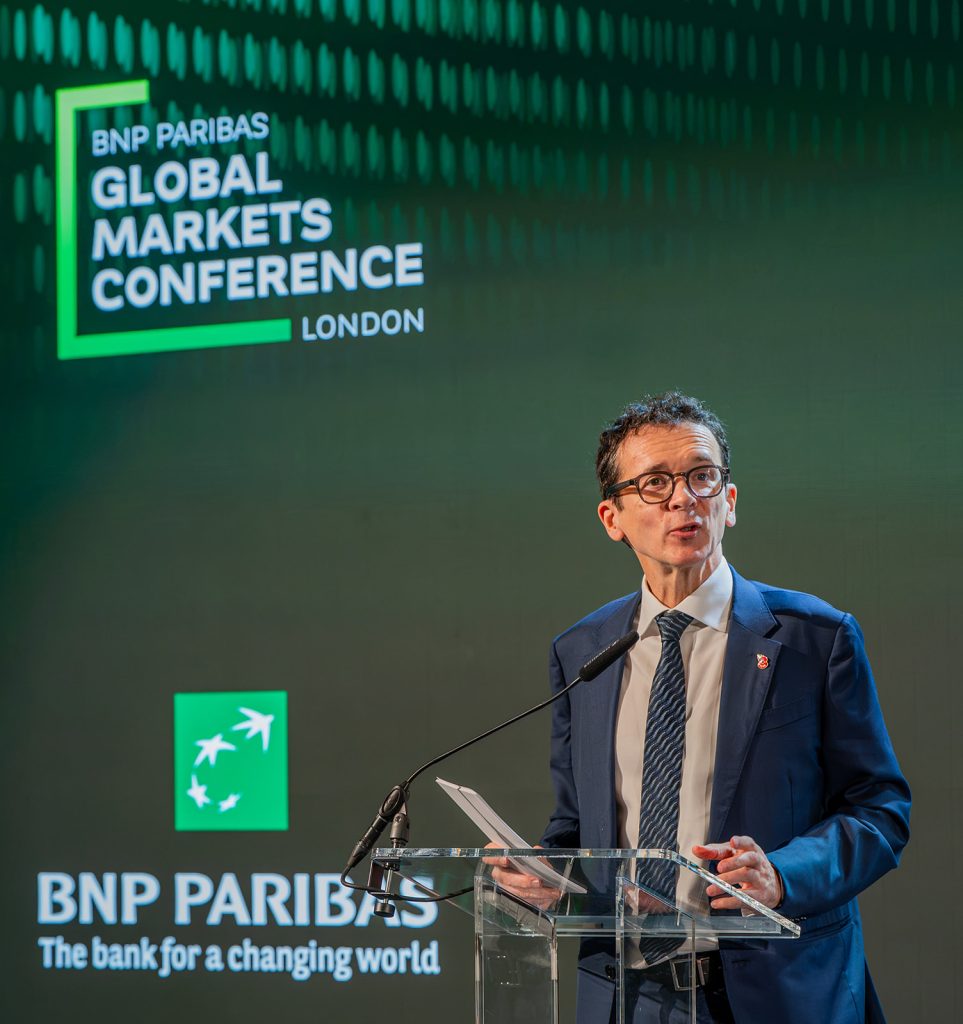
Experts talked about the importance of capturing AI’s value while managing risk at the BNP Paribas Global Markets Conference 2026.
AI can unlock all sorts of productivity benefits, with asset managers at the BNP Paribas Global Markets Conference 2026 highlighting how the technology is accelerating everyday activities, from investment research and deal-making to back-office processing.
A speaker then described how AI is empowering CEOs and other senior leaders by giving them greater oversight of their businesses, whilst a politician argued the technology’s data analytics capabilities could transform government planning systems and procurement processes.
However, the technology’s growing sophistication and autonomy also means it could be very dangerous in the wrong hands, as the recent Hugging Face breach demonstrates, experts noted.
As AI becomes more embedded in the global economy, supply-chain risks and potential bottlenecks involving critical minerals, semiconductors and lithography machines must be taken into account, said Paul Hollingsworth, Head of DM Economics, Global Markets, BNP Paribas.
At a macro level, views on the AI equity market rally range from it being a bubble poised to burst to being an entirely rational response to what could be the fourth industrial revolution.
Experts at the BNP Paribas Global Markets Conference 2026 believe the truth lies somewhere in between these two narratives.
“We are four years into the AI boom, and it raises the question as to whether we are building the railways with the pay-off yet to come, or if the market is simply running a little ahead,” according to Conor Davis, Global Head of Institutional Sales & Investors, BNP Paribas.
A CIO compared today’s widely-held belief that demand for AI is only going to keep growing, with the conviction people had before the 2008 sub-prime mortgage crisis that house prices could only rise. Heavy spending hyper-scalers could also face trouble if AI turns into a commoditised product, the time-lag between infrastructure investment and monetisation becomes too protracted, or greater token efficiency reduces demand for compute capacity, warned the CIO.
Perhaps the biggest headwind facing investors right now is their growing portfolio concentration risk to AI, as even portfolios which may look diversified on the surface are most likely highly correlated to AI, said a CEO at an investment firm.
This bearish sentiment is not shared by everyone. Similar to the dotcom boom more than 20 years ago, an asset manager said there are bubbles manifesting within the AI ecosystem, but some companies will emerge as winners. Despite the dotcom crash being defined by failures such as Pets.com and eToys.com, the asset manager pointed out it also allowed companies like Amazon to flourish.
Economic realignment is accelerating, speakers tell the BNP Paribas Global Markets Conference 2026
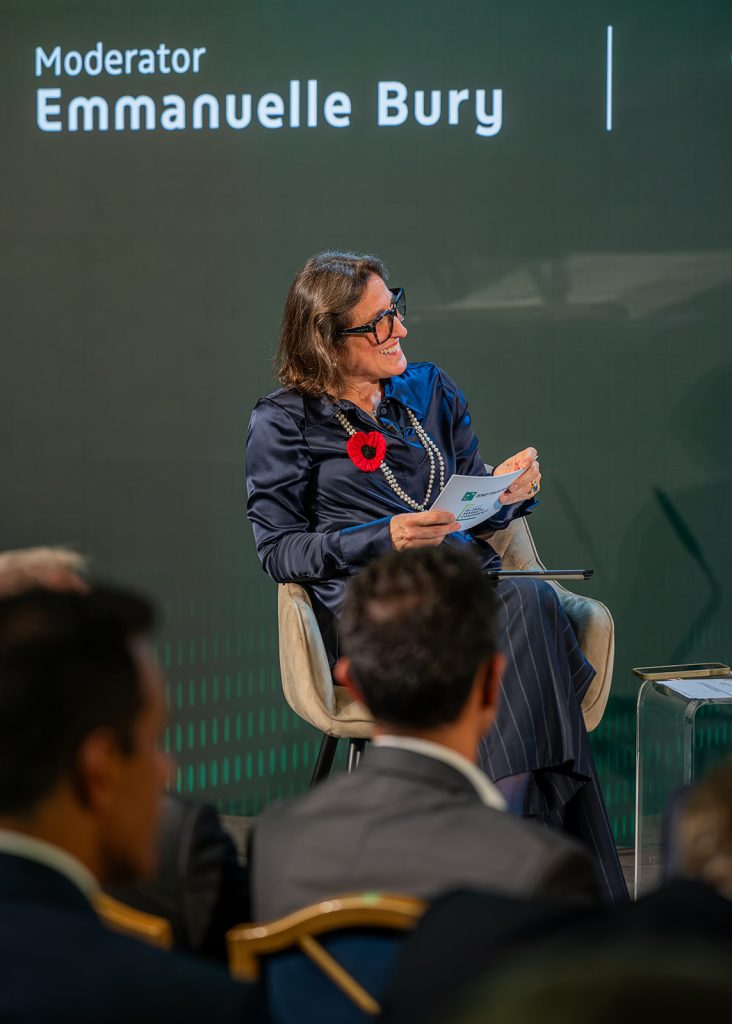
Participants at the BNP Paribas Global Markets Conference 2026 explored how economic realignment is transforming markets.
Speakers at the conference warned investors to keep close tabs on government debt levels in certain European countries.
An academic said recent shocks have driven interest rates above growth rates, raising borrowing costs and making primary deficits harder to manage in parts of Europe.
Several speakers acknowledged governments in Europe will need to make tough decisions on public spending and taxes, policy choices that may be easier said than done.
With public equity markets contracting in terms of the number of listed companies and the growing value creation happening in private markets, retail investors are repositioning their portfolios towards the latter, said speakers at the BNP Paribas Global Markets Conference 2026.
“Retail investors and wealth advisors are bumping up their exposures to private markets, an alternative asset class that has historically only been open to institutional investors,” said Eirik Winter, CEO, BNP Paribas Nordic Region & Head of CIB Nordics.
Over the past decade, the Global Markets Conference has tackled some of the most pressing issues of the day, drawing on unique insights from Presidents, Prime Ministers, Secretaries of State, senior diplomats, military leaders, academics, Central Bankers, global CEOs, and CIOs.
During this period, the finance industry has, in equal measure, demonstrated remarkable resilience in adversity and seized opportunities. “Since 2016, we have been confronted with the pandemic, new global conflicts, the return of high interest rates, and the birth of AI, one of the most impactful technologies in human history. As an industry, we have shown incredible resilience, and we should be proud of how we have navigated this decade of change,” said Olivier Osty, Deputy COO, BNP Paribas Group and CEO, BNP Paribas CIB.
Attended by 970 of the bank’s institutional and corporate clients, BNP Paribas Global Markets Conference was an excellent opportunity for colleagues and clients to both reconnect and gain invaluable insights into some of the main dynamics influencing geopolitics and markets today.