

Key takeaways of the EV and Mobility Conference 2026:
• Asia leads the next wave of intelligent electrification, driven by humanoid robots, AI‑native EVs and rapid advances in battery innovation.
• Semi‑solid batteries, long‑duration storage and copper‑saving tech are changing Asia’s energy ecosystem and strengthening supply chains.
• Value is shifting from manufacturing to intelligence as EVs, robotics and energy storage create a wider mobility opportunity set.
The mobility industry is at an inflection point. Global sales of electric vehicles (EVs) surpassed 20 million units in 2025, hitting a new milestone with one in four cars sold being electric. The momentum surrounding BNP Paribas’ fourth Global EV and Mobility Conference 2026, held in Hong Kong in May, underscores how rapidly the sector is evolving. At the same time, the global landscape has risen in complexity. Geopolitics, rising public deficits and large-scale disruption to the energy supply chain have pushed automakers to diversify, innovate and localise their manufacturing supply chains.
In Asia, the conversations on electric mobility have become more sophisticated. At the Conference, industry leaders highlighted that the region is now shaping the next stage of the market’s growth – with humanoid robots, next-generation batteries, and vehicles as a source of intelligence set to take centre stage.
Humanoid robotics at the heart of the EV and Mobility Conference 2026
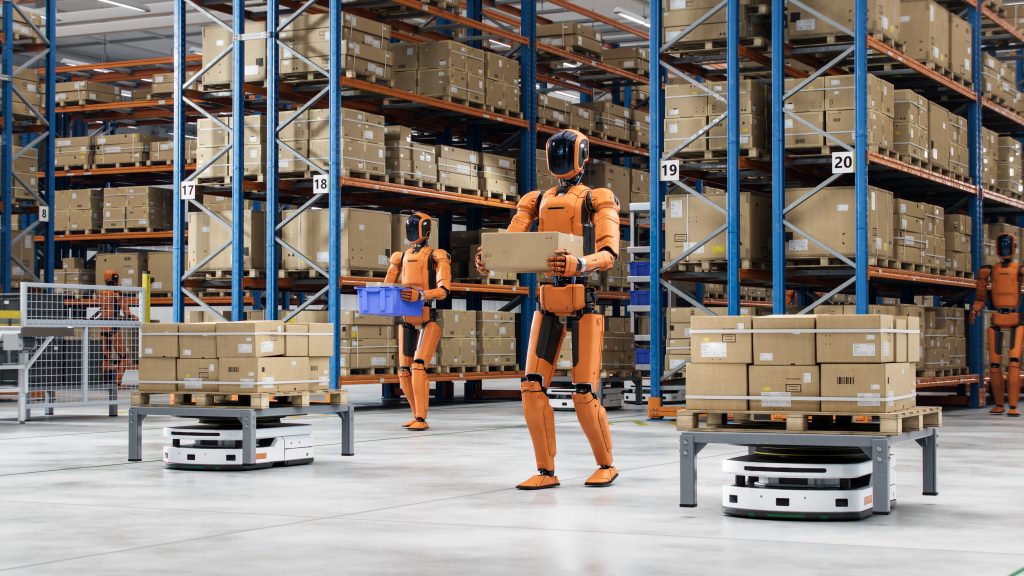
If EVs were the last decade’s industrial revolution, humanoid robotics could well be the next — with Asia, and specifically China, leading the charge, according to speakers at the event. They noted that humanoid robots have begun the transition from demonstrations on stage to actively executing tasks alongside human workers. In China, for example, humanoid tennis robots have been deployed to train students and serve as tennis partners. They are also being tested in households to manage kitchen tasks and cleaning up.
Two key models have emerged: the vision-language-action (VLA) model that allows a robot to follow commands it hears and sees, and the world model, where robots can imagine the consequences of an action before attempting it. Experts speaking at the conference believe humanoid progress will take the shape of latent models combining the two, allowing for faster planning and execution, while limiting risk and safety issues, and highlighted uneven but accelerating progress, with some humanoid models’ ability to execute narrow, specific tasks well, but less success with broader, generalised directives.
Asia leading innovation
Asia leads in humanoid robots partly because of its supply chain depth and battery innovation – the same foundations that propelled its rapidly growing EV dominance, explaining why humanoids were a natural focus for discussion among speakers and participants at this year’s conference.
Both technologies show how artificial intelligence (AI) is moving from cyberspace into the physical world, embedded in machines and robots that can perceive, decide and act autonomously. Experts at the EV and Mobility Conference 2026 noted that both robots and EVs rely on dense batteries, efficient power management and AI models capable of reasoning in real time. As humanoids scale, they are expected to accelerate demand for safer chemistries, semi‑solid batteries, and long‑duration storage – all of which also underpin the next generation of electric vehicles.
Next-gen batteries ramp up
This growing demand for energy storage and batteries – be it from robots or EVs – is driving a new wave of innovation. Audiences heard how energy storage is now one of the fastest-growing segments in China, India, Southeast Asia, Latin America and parts of Africa and the Middle East as energy supply disruptions push countries to focus on energy independence. Growing energy demand to support AI data centres is also accelerating the need for grid-scale storage.
Companies are shaking up the battery game. Semi-solid batteries have emerged as a bridge between traditional liquid lithium-ion and fully solid state batteries, and are already in commercial production in Asia.
Rising copper price in recent years has also driven innovation. Each EV requires some 70 kilogrammes of copper, but surging prices have led to composite current collectors – which reduce copper use by two-thirds – gaining traction, and have even been included in China’s national five-year plan.
Lithium price volatility, meanwhile, has accelerated recycling, localisation and upstream investment from Asia into markets like Africa, Latin America and Australia.
The strategic implication of these moves is meaningful as Asia looks to build a vertically integrated battery ecosystem, spanning mining to recycling to next-gen chemistries.
Speakers pointed to the benefits given the direction of the region’s EV and mobility market more broadly. Industry experts at the forefront of innovation are no longer viewing EVs as just vehicles. Instead, EVs are evolving into platforms for software, AI, energy integration and connected services.
What does this mean for investors?
EVs can now work as compute-as-a-service providers when not in use, robotaxis will become an even bigger force over the next few years, and automakers risk becoming obsolete if they do not embed AI into cars at the outset, according to expert speakers at the EV and Mobility Conference 2026.
Investment opportunities have widened from electric passenger cars to vessels and intelligent cars; and from battery materials and grid-scale storage to power semiconductors and robotics-as-a-service.
China’s dominance in lithium iron phosphate and semi-solid batteries, India’s localisation push for battery cells and components and Southeast Asia’s credentials as a manufacturing hub all point to a complex supply chain with multiple possible entry points for investors.
Banks have a key role to play in advising clients in the mobility value chain on cross-border or cross-regional strategies, and supporting their fundraising plans by connecting them with a global investor base – points that were reinforced during the EV and Mobility Conference 2026.
Interested in learning more about the current state of the EV and mobility industry and where it is heading?
Contact your BNP Paribas Cash Equities representative.

